

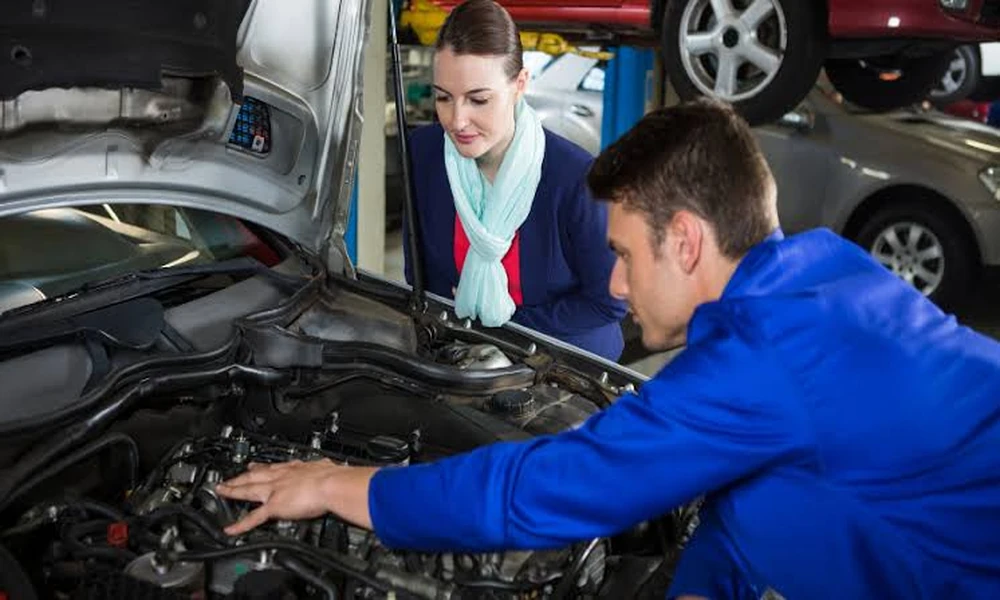
A fender bender that used to cost $400 now routinely runs past $2,000. That’s not just inflation. The car you’re driving today is a fundamentally different machine than anything a body shop was touching ten years ago, and most drivers have no idea how deep that gap runs.
Cameras, radar sensors, aluminum door skins, high-voltage battery packs, and carbon fiber structural panels have quietly turned collision repair into something closer to aerospace maintenance than old-school metalwork. If you’ve ever wondered why your car sat at a shop for two weeks after what looked like a minor hit, this is why. And it matters more than you think when you’re choosing where to take it.
The ADAS Recalibration Problem Nobody Talks About
Advanced driver assistance systems, or ADAS, are everywhere now. A joint report released in October 2024 by the Partnership for Analytics Research in Traffic Safety (PARTS), a collaboration between major automakers and NHTSA operated by MITRE, found that by the 2023 model year, 10 out of 14 ADAS features had surpassed 50% market penetration, with five features exceeding 90% penetration. That’s a staggering shift that happened inside a single decade.
Here’s the repair problem that creates: every single one of those systems has to be recalibrated after a collision. Bump the front bumper hard enough and you’ve potentially knocked the radar module for automatic emergency braking out of its precise alignment window. Replace the windshield and the forward-facing camera needs a static or dynamic recalibration before the lane-keeping assist works correctly again. Miss that step, and the sensor tells the system it’s aimed at the road when it’s actually pointed two degrees off-center.
Recalibrations require specialized equipment, an open flat floor with specific target distances, and a technician trained to interpret the results. A general mechanic with a lift and a parts cannon can’t do this. A shop that doesn’t invest in calibration tooling shouldn’t even attempt it.
The PARTS 2024 ADAS penetration report, published by MITRE and NHTSA, makes clear how quickly these systems have become standard equipment, which means recalibration is no longer a niche service. It’s a core repair step on almost every modern vehicle that comes through a collision shop.
What Aluminum and Carbon Fiber Do to Repair Time
Steel is forgiving. You can beat it, pull it, weld it, and grind it down. Aluminum is not forgiving at all. It work-hardens when you manipulate it, meaning the more you try to reshape it, the more brittle it becomes. Carbon fiber doesn’t bend at all. It absorbs energy through micro-fractures that are often invisible to the naked eye, and the only real fix for damaged carbon fiber structural components is replacement, full stop.
Luxury manufacturers and performance brands figured out years ago that aluminum and carbon fiber dramatically reduce vehicle weight, which improves both fuel economy and handling dynamics without sacrificing rigidity. So they built those materials into door skins, hoods, roofs, and structural members. Now those panels are everywhere, and they demand a completely separate repair environment. Cross-contamination between aluminum shavings and steel is a real problem. Aluminum repairs require dedicated tools, dedicated spray booths in some cases, and technicians with hands-on certification in the specific material.
The labor hours add up fast. A technician working an aluminum-intensive panel isn’t moving at the same pace they would on a steel door. The whole repair timeline stretches, parts sourcing gets complicated because OEM aluminum panels often have longer lead times, and the price per hour of a qualified aluminum tech reflects the scarcity of that training.
The OEM Certification Gap
Original equipment manufacturer (OEM) certifications are the clearest dividing line in the modern collision repair world. When a manufacturer like Ford, GM, Tesla, or Rivian certifies a shop, they’re saying that facility has passed a technical audit: the right tools, the right training, the right repair procedures, and the right space.
That matters because OEM repair procedures are not optional guidelines. They are the documented, tested instructions for restoring a vehicle to its pre-accident structural integrity. Shops that deviate from them, intentionally or out of ignorance, can produce a car that looks fixed but handles a second collision far worse than the manufacturer intended.
The talent required to earn and maintain those certifications is increasingly specialized. The median annual wage for automotive body and related repairers was $51,680 in May 2024, according to the U.S. Bureau of Labor Statistics, which also projects about 16,000 annual openings in the field from 2024 to 2034 despite slower-than-average overall employment growth.
That opening count sounds large until you realize how many of those seats need to be filled by people who can perform ADAS calibrations, work aluminum panels, and follow OEM repair documentation. The certified technician pool is genuinely tight, which is exactly why certification from shops that have built that team actually carries weight.
A multi-location operation like Car Craft in St. Louis, which holds OEM certifications across its locations, represents the kind of investment in tooling and technician training that modern vehicle repair actually requires. Certifications aren’t marketing. They’re evidence of infrastructure.
EV Repair Is Its Own Separate Universe
Electric vehicles add a layer on top of everything above. The high-voltage battery pack on a Tesla, Rivian, or Chevy Equinox EV sits low in the chassis specifically because that position lowers the center of gravity and improves handling. It also makes the battery pack one of the first components threatened by undercarriage or side impact damage.
Working around live high-voltage systems requires lockout procedures, insulating gloves rated for the correct voltage class, and technicians who understand what happens if they create an unintended circuit path. This isn’t theoretical risk. It’s the reason Tesla and Rivian run their own certification programs and audit shops on their safety protocols before granting certification.
EVs also generate more total damage in low-speed collisions than comparable gas-powered vehicles, because the battery enclosure is part of the structural floor and replacing it means the repair scope balloons immediately. Shops that haven’t built out EV capability are already turning away a growing percentage of the vehicles on the road.
The Five-Question Shop Audit
Before you hand your keys to anyone after a collision, run through these questions. They cut through the noise fast.
- Do they hold OEM certification for your vehicle’s brand? Ask specifically, not generically. A shop certified for domestic brands isn’t automatically certified for your aluminum-intensive European vehicle.
- Do they have a dedicated ADAS calibration bay? The floor space, lighting, and target equipment requirements are specific. A yes with vague details is worth pressing on.
- Is their aluminum repair bay physically separated from their steel work area? Cross-contamination is a real quality issue, not a technicality.
- What is their documented process for EV high-voltage safety? A qualified shop answers this immediately and in detail.
- Do they provide a written warranty on structural repairs? A shop confident in its work backs it with paper.
These five questions do more filtering work than reading any review platform, because they require knowledge the shop either has or doesn’t.
What This Means for Your Next Repair Decision
The gap between a capable shop and a general body shop has never been wider. Vehicle technology moved faster than shop infrastructure in most markets, which means there’s a real spread between facilities that invested in the equipment and training and those that are still operating like it’s 2012.
By 2029, approximately 78% of registered vehicles will be equipped with rear cameras, 59% will have front crash prevention, and 55% will have front automatic emergency braking, according to Highway Loss Data Institute projections cited by the National Safety Council. The recalibration demand that creates is not going away. It’s going up.
Your car is more sophisticated than ever. The shop you choose after a collision needs to match that sophistication. The questions above, combined with a hard look at a shop’s actual certifications and equipment, will tell you everything you need to know before you sign anything. Choose accordingly. A bad repair on a modern vehicle isn’t just cosmetic. It’s structural, and you’ll be driving it.
For more data on ADAS penetration trends in the U.S. fleet, the Bureau of Labor Statistics Occupational Outlook for Automotive Body and Glass Repairers also tracks how the workforce is evolving alongside these vehicle changes, with median wages reflecting the premium placed on certified, specialized technicians.
| Repair Type | Key Requirement | Why It Matters |
|---|---|---|
| ADAS Recalibration | Dedicated calibration bay and OEM software | Safety systems fail silently without proper reset |
| Aluminum Panel Repair | Separated work area and certified technician | Improper repair causes brittleness and structural failure |
| Carbon Fiber Damage | OEM replacement parts and inspection protocol | Micro-fractures are invisible but structurally critical |
| EV High-Voltage Systems | Manufacturer certification and safety protocols | Live battery risk demands trained handling at every step |
| OEM Structural Repair | Documented OEM procedures and audit trail | Deviations compromise crash performance in future collisions |
“These results underscore the tremendous efforts of automakers, in close collaboration with government partners, to double down on safety.” This framing from the PARTS 2024 ADAS report captures exactly the pace at which vehicle complexity has accelerated, and why repair infrastructure must keep up with it rather than trail behind.