

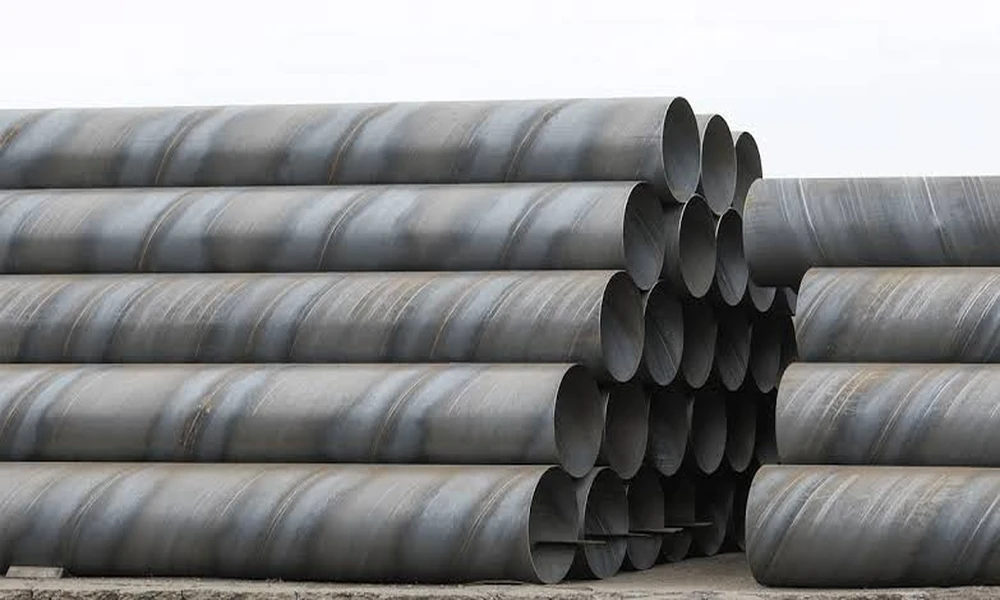
When urban skylines push higher and bridge spans grow longer, what keeps all that concrete and steel steadfast above shifting earth? The answer lies beneath our feet, where heavy wall steel pipe forms the backbone of modern deep foundation projects.
Heavy Wall Steel Pipe: Backbone of Deep Foundation Projects
Settling for anything less than absolute stability in large-scale construction simply is not an option. Heavy wall steel pipe, often referred to as piling pipe, is engineered to handle the immense, concentrated loads at the heart of deep foundations. Contractors rely on its substantial diameter and wall thickness to channel the weight of structures down to bedrock or stable soil layers. This practice is the critical difference between a building that stands for decades and one that settles unevenly, risking millions in repairs.
The Critical Role in Load Transfer
The real secret to the heavy wall pipe’s effectiveness is its ability to transfer not just vertical loads, but also lateral forces from wind or seismic activity. By driving or boring these steel piles deep into the earth, engineers create a pathway for stress that bypasses weaker layers of soil. It is this transfer that allows bridges, high-rises, and marine structures to resist settlement and remain upright, even in challenging environments.
How Heavy Wall Steel Pipe Meets Structural Demands
Steel piling pipe is manufactured with precise control over diameter, wall thickness, and grade to meet the demanding specifications of each project. Depending on the soil report and architectural ambitions, engineers might specify pipe piles from 4 inches up to 36 inches or more in diameter, with wall thicknesses from under a quarter inch to over an inch.
Case Study: Urban Bridge Foundation Using Heavy Wall Steel Pipe
Bridging the St. Lawrence River in Montreal required more than clever design; it needed dependable foundation technology. In this scenario, contractors faced a mix of fill, clay, and glacial till, an unpredictable blend for load-bearing. Choosing the correct piling pipe became the linchpin for the project’s success.
Project Overview and Challenges
The site presented tight access, limited staging space, and the ever-present risk of riverbank instability. Engineers settled on a blend of 18-inch and 24-inch heavy wall pipe piles to anchor the abutments. Selecting the proper diameter and wall thickness was not just a matter of tables, but of real-time geotechnical adjustments as each pile was driven.
Overcoming Soil Stability Issues with Piling Pipe
By using piles fabricated to exact lengths, with beveled ends for optimal joining, the contractors were able to splice sections on site and drive through layers of unpredictable density. This adaptability, combined with high-quality steel grades, ensured absolute structural integrity all the way to stable substrata.
Types and Specifications of Heavy Wall Steel Pipe in Foundations
Pipe piles come in two key forms: welded and seamless. Welded piles are often chosen for their cost-efficiency and availability in large diameters, while seamless options offer extra strength when required.
ASTM A252 Grades and Their Structural Implications
Most heavy wall steel piles conform to ASTM A252 standards, which outline three structural grades:
| Grade | Minimum Yield Strength (psi) |
|————–|—————————–|
| Grade 1 | 30,000 |
| Grade 2 | 35,000 |
| Grade 3 | 45,000 |
Grade selection is dictated by engineering specifications; higher grades are mandated for projects with extreme load or seismic demands.
Comparing Welded vs. Seamless Pipe Piles
While both types serve deep foundation needs, welded pipe is more common in large-scale civil projects due to easier customization and lower price, whereas seamless is preferred for critical infrastructure where failure is not an option.
Size and Wall Thickness Considerations for Different Loads
A micro-pile supporting an underpinning project might require a 4-inch pipe with a modest wall, while a highway bridge abutment demands 30-inch diameter piles with walls up to an inch thick. In every case, matching pipe dimensions to the expected load is non-negotiable.
Fabrication and Preparation for Site-Ready Piles
Installation is only as good as preparation allows. Fabricators like Stealth Pipe and Steel cut, bevel, and splice pipe to spec, ensuring pieces arrive site-ready. Welding augments length or repairs, and specialized driving shoes or end plates help the piles penetrate dense ground without deformation. Durable coatings are applied for extra longevity, particularly where marine exposure or aggressive soils threaten corrosion.
Applications Beyond Foundations: Versatility of Heavy Wall Steel Pipe
Heavy wall piling pipe is not confined to skyscrapers. Its uses include micro-piling and underpinning in compact urban lots, retaining walls to prevent soil movement, marine docks, bridge supports, and shafts for helical and caisson piles. Versatility is the hallmark; a single product type provides solutions across a spectrum of infrastructure challenges.
Sourcing and Logistics: Ensuring Project Success
Availability can make or break timelines. Suppliers offering a mix of new, surplus, and carefully graded used pipe allow contractors to balance quality and cost. Local inventory reduces lead times, especially for metropolitan construction sites with limited laydown areas.
For projects in Montreal, contractors often refer to Stealth piling pipe in Montreal to source pile tubes efficiently. Fast, regionally-focused supply chains keep projects on schedule, minimizing costly delays.
Lessons Learned and Best Practices from Real Projects
Matching pile specs to site conditions is crucial. Common pitfalls, like underestimating wall thickness or failing to account for splicing needs, can delay installation. Smart procurement, choosing surplus or used pile wisely, can shave costs without sacrificing structural integrity. Above all, collaboration between engineers, suppliers, and installers returns the highest dividends.
Future Trends in Heavy Wall Steel Pipe for Deep Foundations
Material advancements are bringing higher-yield steels and more efficient welding techniques to foundation engineering. Environmental pressures are nudging suppliers toward recycling and sustainability, especially in urban projects. Integration with advanced geotechnical monitoring and digital pile-driving records is streamlining both construction and oversight. The result? Stronger, safer infrastructure, built for the demands of the next century.